
Since the start of the pandemic, our daily lives have become more complicated, and cooking has been in much higher demand! To get through it without pulling your hair out, here are 10 practical tips that will help you be more efficient in the kitchen.
1. Organize your space
Even a tiny kitchen can be highly functional. Store away small appliances you only use once a year. Keep a container for your most frequently used cooking utensils: wooden spoons, whisk, tongs, and spatula. This will save you from having to rummage through a messy drawer every time! The idea is to have what you use most often within easy reach and store the rest to maximize space.
2. Free up your countertops
Before starting a recipe, take a few minutes to tidy up bills, keys, notebooks, toys, or any stray papers that you might get dirty. Your movements will be safer and faster if you have space to work. And it frees your mind too!
3. Equip yourself
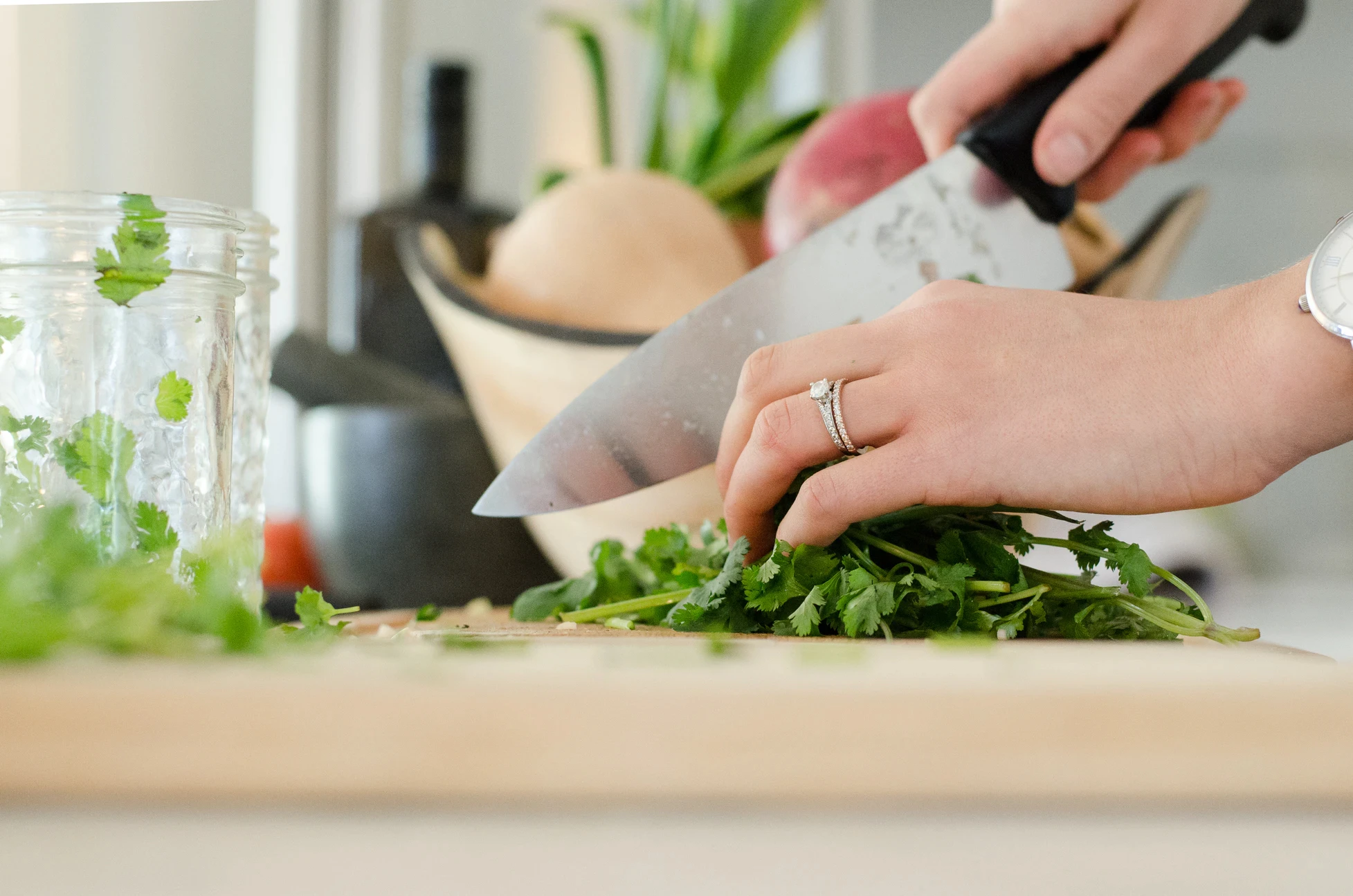
No need to spend a fortune: what you really need is a large, stable cutting board and a good, sharp knife. You’ll be much more comfortable working than with a small, wobbly board, ingredients falling everywhere, and a knife that has a mind of its own! And if you want to go further and fully equip your kitchen, here’s what Geneviève’s kitchen contains. You can make all the recipes found here and in her books with these accessories. And if you need new knives, here are a few tips for shopping for them.
4. Choose trusted recipes
If you want to be sure your dinner is a success, now’s not the time to experiment! Stick to reliable, tried-and-tested recipes (like ours !), especially if you’re new to cooking. With experience, you’ll feel more comfortable improvising new dishes or adapting recipes you’ve already made.
5. Opt for simple recipes with few ingredients.
On a busy weeknight, aim for simplicity. Save the big culinary projects for the weekend or for a time when you have plenty of time. On a Wednesday night, things need to move quickly! Five-ingredient recipes are a winner when time is short.
6. Skim the recipe before you begin
Do you have all the ingredients and equipment? Do you understand all the steps? It’s time to Google the technical terms or call your foodie best friend for a quick tutorial. By reading the entire recipe, you’ll avoid unpleasant surprises and won’t get stuck in the middle of cooking, or reach a dead end because you realize your blender is broken.
7. Limit distractions
Once you get started, stay focused. It’s easy to accidentally add a double dose of cayenne pepper when you’re distracted by a freshly arrived text! And don’t rely too much on your memory for cooking times; you might miss them. Use your phone’s timer—that’s one less thing to worry about. When the timer goes off, judge for yourself if it’s ready. No two ovens are the same temperature, and no two pans react the same way. Go by the result described in the recipe, and add a minute or two if needed, until it’s perfectly browned.
8. Clear away as you go
Prepare a large bowl and place the peelings in it for the compost. Keep a damp cloth handy to clean your work surface along the way. Finished with the cheese grater? Don’t wait to put it in the dishwasher. While the dish simmers, put away anything you won’t be using anymore, soak any stuck-on food, or set the table. The kitchen won’t be a battlefield, and you’ll be able to eat much faster!
9. Taste and adjust
A less juicy tomato, a saltier cheese, a more bitter lettuce, or a more acidic pineapple can all affect the taste of the recipe. Don’t be afraid to make adjustments. By tasting at different stages, you’ll catch everything on the fly. And, when it’s time to serve, place the seasonings you used in the center of the table so everyone can add their own personal touch. It’s also a great way to avoid using the salt shaker
10. Get ahead
And while you’re at it, get out your cutting board and knife and chop up tomorrow’s vegetables. Or, make enough ingredients to double or triple your chili, curry, soup, and spaghetti sauce recipes… and freeze some for a future dinner break. It won’t take much longer to cook this time, and it’ll save you a meal next time.
With these small actions, you’ll gain precious minutes in your already busy day. You’ll feel more confident, more competent, and the task will automatically become less burdensome and less stressful.
Remember, practice makes perfect. Be kind to yourself! You’re allowed to make mistakes. A béchamel sauce stuck to the bottom of the pan or an overcooked pork tenderloin—it happens! It’s not the end of the world, and the beauty of it is that there will soon be another meal to prepare. You’ll have the chance to redeem yourself!